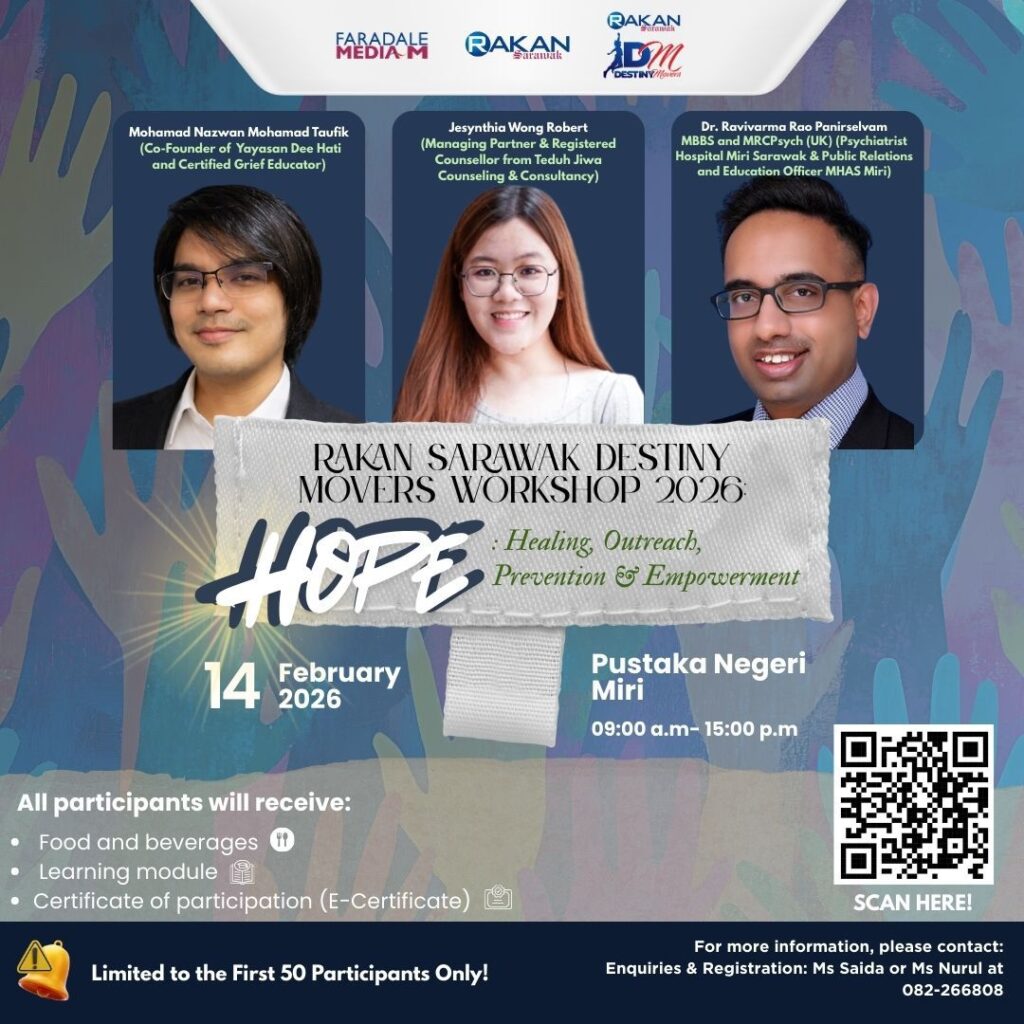
Healing, Outreach, Prevention & Empowerment

Date:

✨ RAKAN Sarawak Destiny Movers Workshop 2026
HOPE: Healing, Outreach, Prevention & Empowerment

Join us for a meaningful one-day workshop designed to support emotional well-being, strengthen resilience and empower individuals through guided learning and shared experiences.

📅 14 February 2026
⏰ 9.00 AM – 3.00 PM
📍 Pustaka Negeri Miri
💰 Participation Fee: RM50.00 only

🎓 Facilitated by experienced professionals
🍽 Food & beverages provided
📘 Learning module included
📜 E-certificate upon completion

⚠️ Limited to the first 50 participants only!
👉 Register now by scanning the QR code and secure your seat today.
LEAVE A REPLY

Please enter your comment!
Please enter your name here

Share post:

Subscribe

spot_imgspot_img

Popular

More like this
Related

Digital Age Mental Health Crisis

Digital pressures and heavy screen time are severely impacting youth mental health across Malaysia and Sarawak. Experts warn that immediate, collaborative community action is urgently required to protect vulnerable teenagers from escalating online addiction, cyberbullying, and severe psychological distress.

Sarawak Advances Sustainable Smart Homes

The UTS Smart Home prototype in Sibu showcases Sarawak’s commitment to sustainable living. Constructed from repurposed shipping containers and equipped with solar panels and rainwater harvesting, it demonstrates how green technology can enhance modern residential living across the state.

Weaving the Digital Thread

ICT can keep Sarawak's living heritage alive. Phones, WhatsApp, radio, and community centres connect youths with elders. Small grants support monthly recording circles. Heritage lives when people share songs, crafts, recipes, and stories often. This turns archives into daily practice.

Digital Failures Are Governance, Not Tech

Governments spend billions digitizing services, yet catastrophic failures persist because the technology works, but the governance does not. From Healthcare.gov to Robodebt, these costly mistakes reveal a pattern: when the interface fails, the state fails its citizens, treating the vulnerable as the problem.